
Autumn Hills Orchard CSA–Thursday pickup 2-5 and Friday pickup 2-6! AHO CSA runs 8/28 through 10/16
WEEK 8-FINAL WEEK-October 15, 2026
Fuji Apples– a premium, large-sized apple variety instantly recognizable by its dull reddish-pink blush striped over a yellow-green background. Renowned for its exceptionally high sugar content and low acidity, it delivers an intensely sweet, honey-like flavor with a refreshing, crisp bite and outstanding juiciness. Customers will love its remarkable shelf life, which allows it to stay firm and crisp far longer than other apples, as well as its incredible versatility-making it just as perfect for fresh snacking and salads as it is for baking, roasting, and making sweet applesauce.
Northern Spy Apples– a legendary American HEIRLOOM variety that first originated in East Bloomfield, New York around 1800. This large, stout winter apple features a thin, yellow-green skin beautifully streaked with bright carmine red and pink flushes. Beneath its surface lies a dense, creamy-white flesh that is exceptionally crisp, tender, and famously juicy. When bitten into, the Northern Spy delivers a sprightly, complex sweet-tart profile-characterized by an initial rush of tartness balanced by a honeyed cider freshness, subtle floral notes, and undertones of sweet pear and warm spice. People absolutely love this multi-purpose variety because it is the ultimate baking apple; its firm texture holds its shape perfectly without turning to mush, prompting the famous old adage, “If it’s not made from Spy, it’s not a pie.” Beyond baking, customers will appreciate its versatile capability as an excellent fresh-eating snack, a rich addition to hard ciders, and a phenomenal winter storage option that naturally keeps its incredible crunch and flavor for up to three to six months.
Newtown Pippin Apples– a “legendary” American HEIRLOOM variety dating back to the late 17th or early 18th century. Characterized by its medium-to-large size and somewhat flattened, round-conic shape, it features a semi-thick, smooth, yellow-green skin often kissed by a faint red-pink blush or light, rough russeting. Beneath the skin lies an ivory to pale yellow flesh that is incredibly dense, firm, and exceptionally crunchy. When freshly harvested, the taste is briskly tart and highly acidic with a distinct, light aroma of pine and citrus. However, this winter variety shines brightest after a month or two of cold storage, where its flavor mellows and transforms into a complex, sweet-tangy profile layered with sophisticated nuances of pineapple, tangerine, and walnut. Customers will love this apple for its remarkable culinary versatility and unmatched historical prestige. Prized by founding fathers like Thomas Jefferson and George Washington, it is the ultimate choice for food connoisseurs and home bakers; its dense flesh holds its shape beautifully in pies and tarts, while its natural aromatic depth elevates artisanal juices and hard ciders.
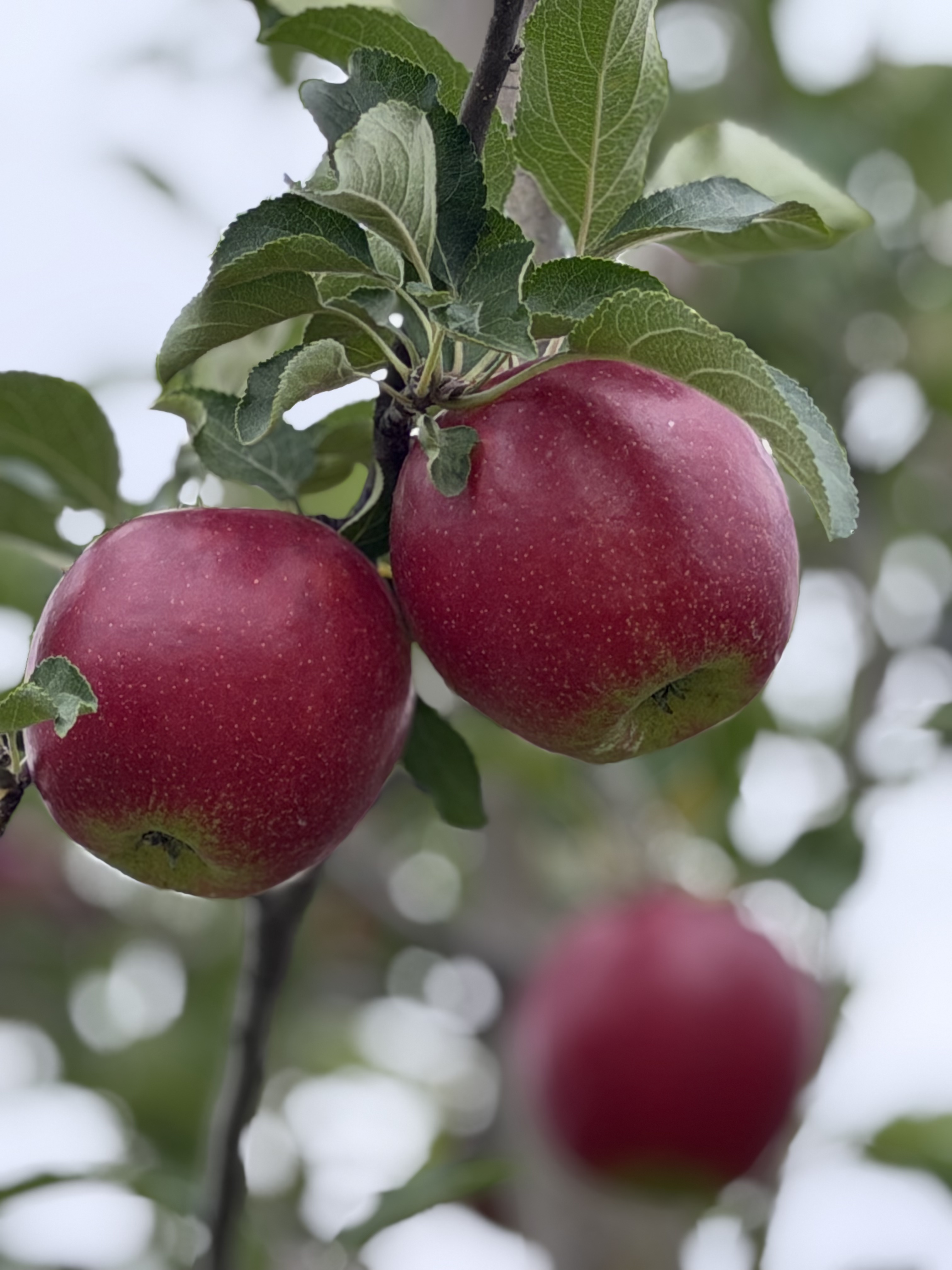
Empire Apples- a medium-sized, round fruit characterized by an eye-catching, deep maroon-red skin highlighted with faint white markings and a light green blush at its crown. Developed at Cornell University in the 1940s and named after its home state of New York, it is a hybrid of the Red Delicious and McIntosh varieties. It features a brilliant, creamy-white interior. Its flavor profile hits a perfect, lively sweet-tart balance, blending the refreshing sweetness of a Red Delicious with the bright, tangy acidity and vinous, berry-like aroma of a McIntosh. Customers will love its remarkably dense, snappy, and crunchy texture that releases a surge of refreshing juice with every bite. Because its firm flesh is uniquely slow to oxidize or turn brown after being sliced, it has earned a legendary reputation as the ultimate, durable “lunchbox apple” that won’t bruise easily in a bag. This exceptional versatility makes it equally fantastic for crisp autumn snacking, vibrant salads, or holding its shape beautifully in baking and home-cooked pies.
Blake’s Pride Pear -(Pyrus communis) is a premium European hybrid introduced by the USDA in 1999, specifically bred for its exceptional disease resistance and backyard reliability. Visually, the medium-to-large fruit is highly attractive, featuring a short neck and glossy, golden-yellow skin accented with delicate tan-russet speckles. When you bite into it, the taste is exceptionally sweet and highly aromatic, drawing frequent comparisons to the rich flavor profile of a Comice pear. Its off-white flesh boasts a smooth, melting, and buttery texture that is incredibly juicy. Customers absolutely love this variety because it offers a “best of both worlds” experience: it delivers the gourmet, dessert-quality eating experience of a high-end European pear while coming from an incredibly resilient tree that is highly resistant to fire blight. Additionally, people appreciate its culinary versatility; while it is phenomenal for fresh eating straight off the branch, its balanced sugars and excellent structure mean it stores well and holds up beautifully when used for canning, baking, and making homemade pear butter.
Harrow Sweet Pears– a premium variety originating from the Agriculture Canada Research Station in Harrow, Ontario, where it was developed as a cross of the classic Bartlett and Purdue 80-51. True to its name, this late-season gem is celebrated for its exceptionally rich, low-acid sweetness and incredibly juicy, melting white flesh that delivers the classic, buttery European pear experience. Visually striking, its smooth golden-yellow skin features a beautiful sun-kissed red or orange blush. It captures the best of its beloved Bartlett heritage but develops an even deeper sweetness and a dense, luscious texture. Perfectly suited for fresh eating right out of hand, it also holds its form beautifully when used for baking, canning, or pairing with fine cheeses!
WEEK 7-October 8, 2026
Baldwin Apples-a quintessential New England (Wilmington, MA!) heirloom variety, they have one of the most dramatic “rise and fall” histories of any fruit. Throughout the 1800’s, the Baldwin was the most popular and widely planted commercial apple in New England and New York. It was a household name and the absolute backbone of the Northeast’s apple industry. Its thick skin and dense flesh meant it could be shipped long distances-even overseas-without bruising. It didn’t just slowly fade away; its commercial empire was wiped out almost overnight. In the brutal winter of 1933/34, an early thaw caused sap to start flowing through the trees. Immediately after, temperatures plummeted to a catastrophic 40 degrees below 0. Baldwin trees are uniquely vulnerable to extreme winter freezes, the expanding frozen sap literally caused the trees to split and explode. Over two-thirds of all Baldwin trees in New England died that winter, killing millions of trees. Ruined farmers had to replant, but they chose not to bring back the Baldwin. They are “biennial,” meaning they naturally produce a massive crop only every other year. Instead, growers replaced them with a much more cold-hardy, reliable, annual-bearing variety: the McIntosh. The McIntosh quickly took over the American market, and the Baldwin faded into history. While they “died out” from commercial grocery store shelves, Baldwins are not extinct. Today, they are treasured as a specialty heirloom variety. They have a sweet-tart, sprightly flavor, complemented by warm spice, fruity nuances, and a crisp, juicy texture, with subtle notes of spice, pear, or apricot. Crisp and refreshing eaten fresh, they are also exceptional for pies and crisps because the dense flesh holds its shape well when cooked. Historically prized for hard cider and single-varietal pressing due to its high sugar and balance. They are known as an excellent winter keeper that can last 1 to 5 months in refrigerator storage.
- SunCrisp Apples– Developed at Rutgers University and officially released in 1994, it is a flavorful hybrid created by crossing Golden Delicious, Cortland, and Cox’s Orange Pippin. Visually, it features a round-conical shape with a yellow-green or golden skin overlaid with a bright orange-red blush. When freshly picked, its dense, crisp, ivory flesh packs a high sugar-and-acid punch, offering a sharp, sweet-tart taste with bright floral, pear, and honey notes. As it sits in cold storage, the intense acidity mellows out over time, transforming the flavor profile into rich undertones of caramel and aniseed while resisting quick browning. Great for fresh eating out of hand, it also pairs well with cheese or caramel! In addition, the firm, dense texture holds its shape well when heated, making it ideal for pies, tarts, crisps, and cobblers. Suncrisp is an exceptional keeper that can last up to 3 to 6 months in cold storage, and its flavor actually improves and mellows over time!
IdaRed Apples-a versatile American classic that originated at the University of Idaho Agricultural Experiment Station in Moscow, Idaho. This variety was created by crossbreeding two vintage New York apples: the Jonathan and the Wagener. Named as a direct nod to its home state, the Idared features a beautifully smooth, yellowish-green skin covered in a bright red blush. When you take a bite, you are greeted by an exceptionally crisp, firm, and juicy pale flesh that delivers a refreshing, sweetly tart flavor. A unique characteristic of the Idared is how its flavor profile evolves over time; when freshly harvested in the fall, it carries a sharp, sprightly tang, but after a few months in cold storage, the flavor mellows into a milder, sweeter dessert profile. Because its firm texture holds its shape perfectly under heat without turning to mush, it is widely celebrated as an unparalleled choice for baking whole, crafting pies, and cooking into a beautiful pink applesauce!
McIntosh Apples-feature a distinctively tangy, tart, and mildly sweet flavor with tender, juicy, white flesh and a signature aromatic, slightly spicy, wine-like punch. Discovered as a chance seedling in 1811 by John McIntosh on his farm in Ontario, Canada, the variety was later propagated by his son Allan and named in 1870, eventually becoming a massive commercial staple and Canada’s national apple. They became wildly popular because of their incredible culinary versatility-thriving in cool northern climates, offering a refreshing bite for fresh snacking, and uniquely breaking down quickly when cooked to create smooth applesauce or soft pies. For the everyday consumer, the McIntosh apple holds a few fascinating secrets, starting with its massive impact on modern technology; Apple Inc.’s iconic Macintosh computer line was explicitly named after this fruit because it was the favorite snacking apple of project founder Jef Raskin. When shopping for them, it is important to know that they have highly delicate skin and tender flesh that bruise easily, meaning they require incredibly gentle handling from the grocery cart to the kitchen. Once you get them home, they must be stored in the refrigerator’s crisper drawer. If you plan to bake with them, keep in mind that their flesh breaks down into a smooth purée very fast; you will need to add a thickener or slice them extra thick if you want them to hold their shape in a structured pie. Finally, their flavor profile shifts dramatically depending on when you buy them, as early-season harvests deliver a sharp, tangy acidity while late-season apples mellow into a deeply sweet, cider-like treat.
Harrow Sweet Pears– a premium variety originating from the Agriculture Canada Research Station in Harrow, Ontario, where it was developed as a cross of the classic Bartlett and Purdue 80-51. True to its name, this late-season gem is celebrated for its exceptionally rich, low-acid sweetness and incredibly juicy, melting white flesh that delivers the classic, buttery European pear experience. Visually striking, its smooth golden-yellow skin features a beautiful sun-kissed red or orange blush. It captures the best of its beloved Bartlett heritage but develops an even deeper sweetness and a dense, luscious texture. Perfectly suited for fresh eating right out of hand, it also holds its form beautifully when used for baking, canning, or pairing with fine cheeses!
Magnus Pears-also known as the Magness pear, it is a premier dessert variety developed by the USDA in Beltsville, Maryland, and released in 1968. Named in honor of Dr. John R. Magness, this exceptional fruit was bred by crossing two legendary varieties: the incredibly sweet Seckel and the rich, luxurious Comice. The result is a medium-to-large, lightly russeted greenish-yellow pear renowned by fruit lovers for its unparalleled flavor. When fully ripe, it delivers a velvety, melt-in-your-mouth buttery texture that is completely free of stone-like grit cells. Each bite releases a luscious explosion of sweet, honeyed juice complemented by a deeply perfumed, complex floral aroma that makes eating it a truly divine experience.
How to Ripen Pears at Home
Pears are unique because they ripen from the inside out after they are harvested. Because they do not mature fully on the tree, you will almost always buy them firm and need to finish the ripening process at home.
1. The Countertop Method (Standard)
- Leave them at room temperature: Place your firm pears in a single layer on your kitchen counter or a fruit bowl.
- Avoid direct sunlight: Keep them away from hot window sills, which can cause them to rot or ripen unevenly.
- Timeline: This typically takes 2 to 7 days, depending on how firm the fruit was when you purchased it.
2. The Paper Bag Method (Fast Track)
- Trap the gases: Place your firm pears into a brown paper bag and loosely fold the top closed. Pears naturally release ethylene gas as they mature, and trapping this gas accelerates the ripening process.
- Add a companion fruit: To speed things up even more, drop a ripe banana or apple into the bag with the pears. These fruits release ethylene, cutting the ripening time down to just 1 to 3 days.
- Avoid plastic bags: Never use plastic, as it traps moisture and cuts off oxygen, which will cause the pears to spoil and ferment.
3. How to Check for Ripeness: “Check the Neck”
- Apply gentle pressure: Do not squeeze the main body of the pear, as this will bruise the delicate flesh. Instead, press your thumb gently near the stem end (the neck).
- Look for a slight give: If the flesh near the stem yields slightly to the pressure, the pear is sweet, juicy, and ready to eat.
- Color isn’t always a clue: While some varieties change color (like Bartlett turning from green to yellow), many gourmet varieties (like Magness, Anjou, or Bosc) show very little color change as they ripen. Relying on the thumb test is the safest bet.
4. How to Hold Ripe Pears
Move them to the fridge: Once a pear passes the neck test, it is at peak flavor. If you aren’t ready to eat it immediately, place it in the refrigerator. Cold temperatures slow down the ripening process significantly, buying you an extra 3 to 5 days of perfect eating quality.
WEEK 6-October 1, 2026
Bosc Pears-Bosc pears are a true standout in our orchard, celebrated for their elegant, elongated necks and beautiful, warm cinnamon-bronze russet skin. Unlike other varieties, these gourmet pears are uniquely crisp and sweet even before they fully soften, offering a delightful crunch if eaten early, or a smooth, melting texture as they ripen. Every bite delivers a rich, complex flavor profile marked by honeyed sweetness and distinct notes of warm autumn spice. Their firm, dense flesh holds its shape beautifully, making them the absolute best choice for baking, poaching, and roasting, though they are equally magnificent sliced fresh onto a cheese board. Enjoy!!
Golden Delicious Apples– a classic favorite apple, celebrated for their exceptionally sweet, honey-like flavor and subtle hints of spice. These versatile fruits feature a distinctive, bright greenish-yellow skin that sometimes blushes with a soft pink tint when perfectly ripe. Beneath their smooth exterior, you will find a crisp, juicy, and fine-textured flesh that resists browning longer than other varieties. Because they hold their shape beautifully and have a naturally high sugar content, Golden Delicious apples are the ultimate all-purpose choice, making them just as delightful for fresh snacking and salads as they are for baking into pies, mashing into applesauce, or roasting with dinner.
Summer Rambo Apples-a classic, large heirloom apple that originated in 16th-century France. It is one of the very first specialty apples to ripen. The apple is mildly tart, subacid, and aromatic with a refreshing, wine-like (vinous) or tangy complexity when fully ripe. It is balanced-not overly sweet. The apple is excellent for fresh eating if you enjoy a tangy snap, and highly prized for culinary uses like quick applesauce, pies, tarts, and baking because the flesh cooks down smoothly and holds great flavor.
Spigold Apples– a large, high-quality apple variety developed in 1962 by crossing the legendary Northern Spy and Golden Delicious apples. Visually striking, this hefty, ribbed fruit features a bright skin flushed with vivid red and bronze striping. Inside, its light-yellow flesh is remarkably dense, fine-grained, and exceptionally crisp, breaking with a satisfying snap before melting effortlessly in the mouth. Apple connoisseurs love the Spigold because it delivers a perfectly balanced, multi-dimensional flavor profile that features the honeyed, aromatic sweetness of Golden Delicious blended with a sprightly zest and spicy, cidery undertones inherited from Northern Spy. This incredible sugar-to-acid balance, combined with an incredibly juicy texture, makes it an ultimate dual-purpose apple-sublime for fresh, out-of-hand eating and highly prized for baking because it retains its shape and deep flavor in pies without needing excessive added sugar!
Spencer Apples– a medium-to-large, semi-thin-skinned dessert apple featuring a vibrant crimson blush over a smooth, glossy yellow-green base. Developed in 1926 as a cross between the McIntosh and Golden Delicious, it boasts a round to conical shape with a small central core. Beneath the surface, its greenish-white flesh is remarkably firm, fine-grained, crisp, and aqueous. Apple lovers are highly drawn to the Spencer for its superb eating quality, particularly its rich, honeyed sweetness which is masterfully balanced by a mild, tangy acidity and subtle, wine-like (vinous) undertones. Fans frequently describe it as possessing the crisp sprightliness of a Golden Delicious combined with the incomparable sweet-tart ambrosia of a perfectly ripe McIntosh. This perfect harmony of high sugar content and crisp, juicy texture makes it a beloved choice for fresh eating, while its ability to keep well in cold storage for up to four months ensures its exceptional flavor can be savored long after the fall harvest.
WEEK 5-September 24, 2026
Gala Apples- a crowd-favorite variety that boasts a rich history and a crowd-pleasing flavor profile. Developed in New Zealand during the 1930s by orchardist J.H. Kidd, this cross between a Kidd’s Orange Red and a Golden Delicious made its commercial debut in the 1960s and has since grown to become one of the most widely grown apples in the world. Visually striking, the Gala features a fine-textured, striped or mottled skin with bright yellow-orange tones blushed with red. When you take a bite, you are greeted by a crisp, creamy yellow flesh that delivers a mildly sweet, vanilla-like flavor with subtle floral undertones and very low acidity. Because it holds its shape beautifully and boasts a naturally sweet profile, it is an exceptionally versatile fruit—perfect for snacking fresh out of hand, tossing into crisp autumn salads, or pressing into refreshing, sweet ciders.
RubyRush Apples– a relatively new, highly regarded cultivar developed by the apple breeding program at Rutgers University and the New Jersey Agricultural Experiment Station. A deliberate cross between the popular GoldRush and Enterprise varieties, it features a balanced, rich, sweet-tart flavor profile with complex fruity notes. The sweetness mirrors its parent GoldRush, but it is deeply aromatic with noticeable floral and lightly spiced undertones. Some tasters even note a deep, pleasant creaminess reminiscent of corn syrup or early vanilla. It is notably juicy and crisp. The flesh is firm, light yellow to bright white, and medium-grained. While it has a solid, chunky crunch, its texture is often compared to a Fuji rather than the distinct, explosive “snap” of a Honeycrisp. Unlike many early or mid-season apples, RubyRush has good storage capabilities, keeping well in standard cold storage for up to 4 to 5 months without losing its desirable crunch.
Summer Rambo-a classic, large heirloom apple that originated in 16th-century France. It is one of the very first specialty apples to ripen. The apple is mildly tart, subacid, and aromatic with a refreshing, wine-like (vinous) or tangy complexity when fully ripe. It is balanced—not overly sweet. The apple is excellent for fresh eating if you enjoy a tangy snap, and highly prized for culinary uses like quick applesauce, pies, tarts, and baking because the flesh cooks down smoothly and holds great flavor.
CrimsonCrisp Apples- a striking, vivid red apple known for its exceptionally firm, dense, and crunchy cream-colored flesh. It delivers a rich, refreshing sweet-tart flavor profile complemented by complex spicy undertones and subtle hints of orange and cherry. This versatile apple holds its shape beautifully when baked in pies or tarts, yet its distinct snap makes it equally perfect for fresh eating, salads, and cheese pairings. As an excellent keeper, it retains its signature crispness and flavor for up to six months when refrigerated, ensuring a long-lasting, premium eating experience.
Italian Plums-often called prune plums or Italian prune plum-they are small, oval fruits featuring deep purple skin coated in a silvery-white protective bloom and a sweet-tart, amber-yellow flesh. When raw, they offer a snappy, dense bite with a concentrated, sweet flavor and subtle citrus notes, but when cooked, their low water content allows them to collapse into a rich, jammy, and intensely sugary-sweet consistency. Native to Europe and famously cultivated across Italy and later brought to North America, these plums earned their “prune” moniker because their high sugar content makes them exceptionally well-suited for drying into prunes without fermenting around the pit. They became an absolute culinary favorite during their brief late-summer and early-autumn harvest window because their dense structure holds up marvelously to baking, transforming ordinary desserts into vibrant, caramelized treats without turning watery. The stellar reputation of Italian plums in American baking is largely tied to the Original Plum Torte Recipe published by food reporter Marian Burros in The New York Times in September 1983. The recipe became the most requested in the newspaper’s history, leading editors to print it every September through 1989. When the paper tried to retire it in 1989 by printing it in a massive border for readers to finally clip and save, an outcry of protests flooded the newsroom, cementing its annual legacy.
WEEK 4-September 17, 2026
Fall is for APPLE PIE……Welcome to your ultimate pie-baking adventure! By picking up this trio of McIntosh, Cortland, and Summer Rambo apples, you are holding the secret formula to a flawless homemade pie. In the oven, these three varieties work together to engineer the perfect filling texture and flavor matrix. The McIntosh melts down completely into a rich, naturally jammy sauce that perfectly binds the filling together without needing excess thickeners. The Cortland softens beautifully while holding its shape just enough for a tender bite, while the Summer Rambo provides a sturdy, aromatic structure and a sprightly tartness that keeps every slice lively. Baked together, they marry sauce and slice into a harmonious, deeply complex masterpiece that will delight any true pie enthusiast!
McIntosh Apples-feature a distinctively tangy, tart, and mildly sweet flavor with tender, juicy, white flesh and a signature aromatic, slightly spicy, wine-like punch. Discovered as a chance seedling in 1811 by John McIntosh on his farm in Ontario, Canada, the variety was later propagated by his son Allan and named in 1870, eventually becoming a massive commercial staple and Canada’s national apple. They became wildly popular because of their incredible culinary versatility-thriving in cool northern climates, offering a refreshing bite for fresh snacking, and uniquely breaking down quickly when cooked to create smooth applesauce or soft pies. For the everyday consumer, the McIntosh apple holds a few fascinating secrets, starting with its massive impact on modern technology; Apple Inc.’s iconic Macintosh computer line was explicitly named after this fruit because it was the favorite snacking apple of project founder Jef Raskin. When shopping for them, it is important to know that they have highly delicate skin and tender flesh that bruise easily, meaning they require incredibly gentle handling from the grocery cart to the kitchen. Once you get them home, they must be stored in the refrigerator’s crisper drawer. If you plan to bake with them, keep in mind that their flesh breaks down into a smooth purée very fast; you will need to add a thickener or slice them extra thick if you want them to hold their shape in a structured pie. Finally, their flavor profile shifts dramatically depending on when you buy them, as early-season harvests deliver a sharp, tangy acidity while late-season apples mellow into a deeply sweet, cider-like treat.
Summer Rambo Apple-a classic, large heirloom apple that originated in 16th-century France. It is one of the very first specialty apples to ripen. The apple is mildly tart, subacid, and aromatic with a refreshing, wine-like (vinous) or tangy complexity when fully ripe. It is balanced—not overly sweet. The apple is excellent for fresh eating if you enjoy a tangy snap, and highly prized for culinary uses like quick applesauce, pies, tarts, and baking because the flesh cooks down smoothly and holds great flavor.
Cortland Apples-Developed in 1898 at the New York State Agricultural Experiment Station in Geneva, New York, the Cortland apple was created by crossing the popular McIntosh with the Ben Davis variety. It was officially introduced to the commercial market in 1915 and named after nearby Cortland County. Breeders wanted to combine the rich, refreshing flavor of a McIntosh with better storage capabilities and disease resistance. Flavor-wise, Cortland apples deliver a sweet, slightly tart, and tangy taste with a hint of wine-like (vinous) complexity. Their texture is crisp and juicy with a tender, fine-grained white interior. They became widely popular because of one standout superpower: their flesh is exceptionally slow to turn brown after being sliced. This slow oxidation, combined with their ability to hold their shape and texture when cooked, makes them universally loved for both fresh slicing in salads or cheese platters and traditional autumn baking in pies and crisps.
Encore Peaches-Autumn Hills Orchard final peach of the 2026 season. It is a highly prized hybrid variety celebrated for its ability to extend the summer harvest well into the early fall. Developed by Rutgers University in New Jersey and introduced in 1980, this heirloom variety is a cross between ‘Autumnglo’ and another select seedling. Its historical significance lies in its unique late-blooming nature; by flowering later in the spring, the tree avoids devastating early frosts that often wipe out mid-season varieties. When it comes to taste and texture, Encore peaches deliver a classical, robust flavor profile that perfectly balances high sweetness with a slight, refreshing tartness. These fruits are typically humongous, firm, and incredibly juicy, featuring a dense, beautiful yellow flesh. Because they are a freestone variety, the succulent flesh separates cleanly and effortlessly from the pit, making them a mess-free delight to eat fresh right off the tree. In terms of physical traits and cultivation info, the Encore peach is visually striking, boasting an attractive yellow-to-orange skin with a vibrant red blush on the side exposed to the sun. Encore peaches are noted for having a slightly lengthier shelf-life at room temperature than other varieties, making them a superb final “ode to summer” for fresh eating, baking into pies, or preserving in jams.
Week 3-September 10, 2026
Ginger Gold Apples-A customer favorite…See below for details.
HoneyCrisp Apples-“a masterpiece”, easily distinguished by their mottled, bi-colored skin of bright red blush over a pale green background. The very first bite delivers a remarkably loud, explosive crunch that releases an abundance of exceptionally sweet, refreshing juice. Unlike other varieties that can be mealy, a tree-ripened Honeycrisp features a firm, coarse cream-colored flesh with a perfectly balanced flavor profile, where a dominant sugary sweetness is rounded out by a subtle, tart undertone. Because they are harvested at peak ripeness right from the branch, these apples carry a crisp, vibrant freshness and a light, honey-like aroma that completely outshines any grocery store counterpart. The most popular apple in the US! For a long time, apple lovers believed the Honeycrisp was a cross between Macoun and Honeygold, but modern DNA testing completely rewrote that history. Scientists discovered its true parents are actually a crisp, flavor-packed variety called Keepsake and a rare, unreleased experimental apple designated as MN1627. Though the experimental tree eventually went extinct, genetic mapping revealed that its parents—Honeycrisp’s grandparents—were the classic, sweet Golden Delicious and a historic, frost-tolerant Russian variety called the Duchess of Oldenburg. This unique family tree acts as the secret formula for the Honeycrisp’s massive success, seamlessly blending the irresistible sweetness of Golden Delicious with the explosive, juicy crunch of Keepsake and the rugged winter hardiness of its Russian ancestry. Amazing!!
Summer Rambo Apple-a classic, large heirloom apple that originated in 16th-century France. It is one of the very first specialty apples to ripen. The apple is mildly tart, subacid, and aromatic with a refreshing, wine-like (vinous) or tangy complexity when fully ripe. It is balanced—not overly sweet. The apple is excellent for fresh eating if you enjoy a tangy snap, and highly prized for culinary uses like quick applesauce, pies, tarts, and baking because the flesh cooks down smoothly and holds great flavor.
Bartlett Pears-Freshly picked, the Bartlett pear is a true sensory delight, boasting a classic, elegant pyriform shape that tapers gently from a rounded base to a slender neck. We harvest a bit early (so they don’t fall off the branches!!), so you’ll want to keep them in the refrigerator for a few days to ripen and soften the flesh. The smooth, thin skin transitions from a vibrant, speckled green to a warm, sun-kissed yellow, sometimes blushing with a delicate rosy hue. Slicing into its creamy, off-white flesh reveals an exceptionally juicy and melting texture that practically dissolves on the tongue. The taste is a harmonious balance of deep, honeyed sweetness punctuated by a bright, aromatic tang, delivering a rich, classic pear flavor that is far more vibrant and perfumed than anything found on a grocery store shelf. Delightful!
Week 2-September 3, 2026
Ginger Gold Apples-see below
Zestar! Apples– a premium, early-season apple famous for its sprightly sweet-tart flavor with a unique, distinct hint of brown sugar and subtle spice. Developed by the renowned University of Minnesota apple breeding program and introduced in 1999, this cold-hardy variety was specifically engineered to defy the reputation of typical late-summer apples, which often trend soft or mealy. Instead, the Zestar! delivers a light, remarkably crisp texture and an invigorating rush of juice with every bite. Featuring a beautiful red-blushed yellow skin, it serves as an excellent all-purpose choice that thrives both as a refreshing snacking apple and as a flavorful addition to baked goods, sauces, and pies. Even better for consumers, it boasts an exceptional two-month refrigerated shelf life, maintaining its signature zesty crunch long after it is harvested.
Gravenstein Apples– a legendary heirloom apple with roots tracing back to 17th-century Denmark, famously perfected in the coastal orchards of Northern California. Highly anticipated each year, it features a beautiful, distinctive skin with delicate orange and red stripes over a greenish-yellow background. Its crisp, exceptionally juicy flesh delivers an intensely aromatic flavor that perfectly balances sharp tartness with honey-like sweetness. Because Gravensteins have a short harvesting window and delicate skins, they are rarely found in traditional grocery stores—making them a true orchard-exclusive treasure for eating fresh, baking into pies, or pressing into unforgettable cider.
Gloria Peaches– a premium, large yellow freestone variety celebrated for its exceptionally sweet, low-acid flavor profile that removes the usual sharp tanginess of traditional peaches, offering a smooth, almost mango-like tropical sweetness. Developed by Dr. Joseph Goffreda at the Rutgers University Agricultural Experiment Station and patented in 2007, this modern cultivar was specifically bred to combine elite dessert quality with superior durability. Visually striking with a 60% to 90% scarlet red blush over a warm orange-yellow background, its bright orange, “nearly non-melting” flesh stays remarkably firm and crisp as it ripens on the tree. Because it is a low-acid variety, the Gloria peach swaps out traditional peachy tartness for an intensely sweet, aromatic tropical flavor profile that many fruit lovers compare to a ripe mango or a honeyed white peach. This unique crispness makes it an excellent, mess-free “commuter peach” for fresh eating on the go without the typical dripping juice, while its robust texture also ensures it holds up beautifully during baking, drying, or fresh slicing.
Pluots-If you love plums and apricots, you will adore the pluot! This incredible hybrid fruit combines the deep, rich sweetness of a plum with the crisp texture and subtle tartness of an apricot. Pluots are famous for their intensely sweet flavor, exceptionally juicy flesh, and smooth, beautiful skin that comes in a stunning variety of speckled colors. Because they inherit the high sugar content of apricots without the sharp tartness of some traditional plums, every bite delivers an explosion of pure, refreshing sweetness. They are perfect for eating fresh right here in the orchard, packing into lunches, or baking into late-summer pies and tarts.
Week 1-August 27th/28th
Paula Red Apples- a tart, tangy early-season apple with a balanced sweet-tart flavor and subtle berry-like or strawberry undertones. Discovered in Michigan in 1960, this relative of the McIntosh has crisp, white flesh that quickly softens, so don’t leave this on the counter for an extended period. Paula Red apples are excellent for fresh snacking and phenomenal for applesauce because they break down into a smooth texture very quickly (leaving the skin on can turn the sauce a natural pink). Some say they are not recommended for whole pies unless mixed with firmer apples, as they turn to mush when baked!
Ginger Gold Apples- are a true silver lining of the early-season harvest, with an origin story as remarkable as their flavor. In 1969, Hurricane Camille devastated the Virginia orchards of growers Clyde and Frances “Ginger” Harvey. While salvaging the surviving trees, Clyde discovered a unique, volunteer seedling that produced beautiful yellow-green fruit instead of the orchard’s usual red apples. He named the new variety after his wife, Ginger. Believed to be a natural cross of Golden Delicious and Albemarle Pippin (a favorite apple of Thomas Jefferson), Ginger Golds are now celebrated as one of the very best early-season cultivars. Customers love them not only for their refreshing, sweet-tart taste and crisp texture, but also because their creamy white flesh naturally resists browning for hours after being cut. This makes them an absolute dream for school lunchboxes, party platters, and fresh summer salads.
Chestnut Crabapple-The chestnut crabapple is a golf-ball-sized fruit with a sweet, nutty flavor and crisp, juicy flesh. Developed by the University of Minnesota, this large crabapple grows up to two inches in diameter. Its skin features an orange-red blush over a yellow or bronze background, often with light russeting. Unlike bitter wild crabapples, this variety tastes delicious right off the branch. Its yellowish flesh is fine-grained, crunchy, and very sweet. It has a rich, nutty taste with soft hints of pear, honey, and vanilla. People love to eat these fruits fresh, cook them into applesauce, or press them into sweet cider
Sweet’n up Peaches- perfectly embody the quintessential summer peach experience: ultra-sweet, incredibly juicy, and bursting with rich dessert-quality flavor. Developed by breeder Dr. Ralph Scorza at the USDA Appalachian Fruit Research Station in Kearneysville, West Virginia, this patented variety was named for its unique, highly vertical “upright” tree structure. Visually stunning, these large peaches feature a vibrant 80% red blush over a warm yellow background. Slicing one open reveals a beautiful yellow, melting flesh that strikes a flawless balance of high natural sugars and classic peach tang. Because they are a true freestone variety, the juicy flesh slips cleanly away from the pit with absolute ease. They are considered one of the absolute best-flavored yellow peaches available, making them perfect for eating fresh “over the sink,” baking into vibrant summer cobblers, or tossing into fresh backyard salads.
Sugar Giant Peaches- a spectacular addition to the mid-to-late summer harvest, legendary for living up to their name in both size and intense sweetness. Developed in 1993 in Modesto, California, this unique variety was bred to combine a colossal size (often averaging over 3 inches in diameter) with an exceptionally firm texture that protects its delicate skin. Visually stunning with a vibrant 85% red blush over a creamy background, slicing one open reveals a pale white flesh that is practically acid-free. This low acidity allows a rich, honey-like sweetness to take center stage, giving customers a purely sweet, mellow bite without any sharp tang. Because they are a freestone variety, the flesh easily separates from the pit, making them an effortless joy to prepare. They are a favorite among chefs and home cooks alike for raw snacking, summer fruit platters, decadent preserves, or lightly grilled alongside a scoop of vanilla ice cream.
Somerset Grapes-The Somerset grape is widely celebrated for its intense, dessert-like sweetness and an exceptionally distinct strawberry flavor flavor profile. Often compared favorably to gourmet table grapes, it offers a rich blend of sugar and flavor notes that mimic fresh-picked summer berries rather than traditional tart table grapes. When you bite into a ripe Somerset grape, the experience begins with a clean, audible snap. The skin is notably tender and thin, lacking the tough, astringent qualities found in many other hardy northern grapes. Beneath this delicate skin is a firm, meaty, and remarkably crisp translucent flesh that yields a burst of refreshing, low-acid juice. As the juice hits your palate, it carries almost no muskiness or heavy “foxiness”—a trait common in Concord hybrids—instead leaving a clean, lingering sweetness that makes it an exceptional fresh-eating fruit straight from the vine.
Medway Community Farm and Needham Community Farm
Week 7-October 6, 2026
European Crimson Gold apple (the Svatava cultivar) differentiates itself significantly from the classic 1930s American heritage variety of the same name. The Svatava version is a standard, medium-sized dessert apple developed in the Czech Republic specifically for its modern agricultural traits. Visually, the Svatava cultivar features a vibrant yellow base skin mostly covered by a striking red-orange blush. In terms of taste and texture, it offers white, exceptionally hard, and juicy flesh with a sharply balanced sweet-tart flavor profile that holds up beautifully over time. A major practical advantage of this newer European variety is its phenomenal shelf life, as it can be stored in cold conditions for up to eight months without losing its signature crunch. The Svatava Crimson Gold apple is highly versatile-Eat it fresh: This is its absolute best use. Because the flesh is exceptionally firm, crisp, and juicy, it delivers a loud, satisfying crunch. The balanced sugar-and-acid kick makes it a refreshing, bold snack on its own or paired with sharp cheeses and nuts. Bake with it, as it holds up beautifully to heat. Because the flesh is so dense, it will not turn into mush when baked. You can slice it into pies, tarts, and galettes where you want the apple pieces to retain their distinct shape and texture.
Spencer Apples– a medium-to-large, semi-thin-skinned dessert apple featuring a vibrant crimson blush over a smooth, glossy yellow-green base. Developed in 1926 as a cross between the McIntosh and Golden Delicious, it boasts a round to conical shape with a small central core. Beneath the surface, its greenish-white flesh is remarkably firm, fine-grained, crisp, and aqueous. Apple lovers are highly drawn to the Spencer for its superb eating quality, particularly its rich, honeyed sweetness which is masterfully balanced by a mild, tangy acidity and subtle, wine-like (vinous) undertones. Fans frequently describe it as possessing the crisp sprightliness of a Golden Delicious combined with the incomparable sweet-tart ambrosia of a perfectly ripe McIntosh. This perfect harmony of high sugar content and crisp, juicy texture makes it a beloved choice for fresh eating, while its ability to keep well in cold storage for up to four months ensures its exceptional flavor can be savored long after the fall harvest.
Bosc Pears-Bosc pears are a true standout in our orchard, celebrated for their elegant, elongated necks and beautiful, warm cinnamon-bronze russet skin. Unlike other varieties, these gourmet pears are uniquely crisp and sweet even before they fully soften, offering a delightful crunch if eaten early, or a smooth, melting texture as they ripen. Every bite delivers a rich, complex flavor profile marked by honeyed sweetness and distinct notes of warm autumn spice. Their firm, dense flesh holds its shape beautifully, making them the absolute best choice for baking, poaching, and roasting, though they are equally magnificent sliced fresh onto a cheese board. Enjoy!!
Week 6-September 29
HoneyCrisp Apples-“a masterpiece”, easily distinguished by their mottled, bi-colored skin of bright red blush over a pale green background. The very first bite delivers a remarkably loud, explosive crunch that releases an abundance of exceptionally sweet, refreshing juice. Unlike other varieties that can be mealy, a tree-ripened Honeycrisp features a firm, coarse cream-colored flesh with a perfectly balanced flavor profile, where a dominant sugary sweetness is rounded out by a subtle, tart undertone. Because they are harvested at peak ripeness right from the branch, these apples carry a crisp, vibrant freshness and a light, honey-like aroma that completely outshines any grocery store counterpart. The most popular apple in the US! For a long time, apple lovers believed the Honeycrisp was a cross between Macoun and Honeygold, but modern DNA testing completely rewrote that history. Scientists discovered its true parents are actually a crisp, flavor-packed variety called Keepsake and a rare, unreleased experimental apple designated as MN1627. Though the experimental tree eventually went extinct, genetic mapping revealed that its parents—Honeycrisp’s grandparents—were the classic, sweet Golden Delicious and a historic, frost-tolerant Russian variety called the Duchess of Oldenburg. This unique family tree acts as the secret formula for the Honeycrisp’s massive success, seamlessly blending the irresistible sweetness of Golden Delicious with the explosive, juicy crunch of Keepsake and the rugged winter hardiness of its Russian ancestry. Amazing!!
CrimsonCrisp Apples– a striking, vivid red apple known for its exceptionally firm, dense, and crunchy cream-colored flesh. It delivers a rich, refreshing sweet-tart flavor profile complemented by complex spicy undertones and subtle hints of orange and cherry. This versatile apple holds its shape beautifully when baked in pies or tarts, yet its distinct snap makes it equally perfect for fresh eating, salads, and cheese pairings. As an excellent keeper, it retains its signature crispness and flavor for up to six months when refrigerated, ensuring a long-lasting, premium eating experience.
Harrow Crisp Pears-Smooth, attractive yellow skin, slightly larger than a standard Bartlett pear. The flesh is brighrt white to cream-white, fine grained, and completely grit-free. They are a firm, crisp pear, (not soft or mushy), holding its shape exceptionally well when sliced or baked. Offers a refreshing, crisp bite (similar to a crunchier cousin of the Bartlett) rather than a melt-in-your-mouth, juicy-soft texture. Excellent for eating fresh out of hand like an apple, slicing onto cheese boards, or baking into tarts since the flesh stays firm. The pear has a mildly sweet flavor, with a clean, classic pear flavor, balance a pleasant subtle sweetness without being overly sugary.
Week 5-September 22
CrimsonCrisp-a striking, vivid red apple known for its exceptionally firm, dense, and crunchy cream-colored flesh. It delivers a rich, refreshing sweet-tart flavor profile complemented by complex spicy undertones and subtle hints of orange and cherry. This versatile apple holds its shape beautifully when baked in pies or tarts, yet its distinct snap makes it equally perfect for fresh eating, salads, and cheese pairings. As an excellent keeper, it retains its signature crispness and flavor for up to six months when refrigerated, ensuring a long-lasting, premium eating experience.
Summer Rambo Apple-a classic, large heirloom apple that originated in 16th-century France. It is one of the very first specialty apples to ripen. The apple is mildly tart, subacid, and aromatic with a refreshing, wine-like (vinous) or tangy complexity when fully ripe. It is balanced—not overly sweet. The apple is excellent for fresh eating if you enjoy a tangy snap, and highly prized for culinary uses like quick applesauce, pies, tarts, and baking because the flesh cooks down smoothly and holds great flavor.
Encore Peaches-Autumn Hills Orchard final peach of the 2026 season. It is a highly prized hybrid variety celebrated for its ability to extend the summer harvest well into the early fall. Developed by Rutgers University in New Jersey and introduced in 1980, this heirloom variety is a cross between ‘Autumnglo’ and another select seedling. Its historical significance lies in its unique late-blooming nature; by flowering later in the spring, the tree avoids devastating early frosts that often wipe out mid-season varieties. When it comes to taste and texture, Encore peaches deliver a classical, robust flavor profile that perfectly balances high sweetness with a slight, refreshing tartness. These fruits are typically humongous, firm, and incredibly juicy, featuring a dense, beautiful yellow flesh. Because they are a freestone variety, the succulent flesh separates cleanly and effortlessly from the pit, making them a mess-free delight to eat fresh right off the tree. In terms of physical traits and cultivation info, the Encore peach is visually striking, boasting an attractive yellow-to-orange skin with a vibrant red blush on the side exposed to the sun. Encore peaches are noted for having a slightly lengthier shelf-life at room temperature than other varieties, making them a superb final “ode to summer” for fresh eating, baking into pies, or preserving in jams.
Week 4-September 15
McIntosh Apples-feature a distinctively tangy, tart, and mildly sweet flavor with tender, juicy, white flesh and a signature aromatic, slightly spicy, wine-like punch. Discovered as a chance seedling in 1811 by John McIntosh on his farm in Ontario, Canada, the variety was later propagated by his son Allan and named in 1870, eventually becoming a massive commercial staple and Canada’s national apple. They became wildly popular because of their incredible culinary versatility—thriving in cool northern climates, offering a refreshing bite for fresh snacking, and uniquely breaking down quickly when cooked to create smooth applesauce or soft pies.For the everyday consumer, the McIntosh apple holds a few fascinating secrets, starting with its massive impact on modern technology; Apple Inc.’s iconic Macintosh computer line was explicitly named after this fruit because it was the favorite snacking apple of project founder Jef Raskin. When shopping for them, it is important to know that they have highly delicate skin and tender flesh that bruise easily, meaning they require incredibly gentle handling from the grocery cart to the kitchen. Once you get them home, they must be stored in the refrigerator’s crisper drawer. If you plan to bake with them, keep in mind that their flesh breaks down into a smooth purée very fast; you will need to add a thickener or slice them extra thick if you want them to hold their shape in a structured pie. Finally, their flavor profile shifts dramatically depending on when you buy them, as early-season harvests deliver a sharp, tangy acidity while late-season apples mellow into a deeply sweet, cider-like treat.
Cortland Apples-Developed in 1898 at the New York State Agricultural Experiment Station in Geneva, New York, the Cortland apple was created by crossing the popular McIntosh with the Ben Davis variety. It was officially introduced to the commercial market in 1915 and named after nearby Cortland County. Breeders wanted to combine the rich, refreshing flavor of a McIntosh with better storage capabilities and disease resistance. Flavor-wise, Cortland apples deliver a sweet, slightly tart, and tangy taste with a hint of wine-like (vinous) complexity. Their texture is crisp and juicy with a tender, fine-grained white interior. They became widely popular because of one standout superpower: their flesh is exceptionally slow to turn brown after being sliced. This slow oxidation, combined with their ability to hold their shape and texture when cooked, makes them universally loved for both fresh slicing in salads or cheese platters and traditional autumn baking in pies and crisps.
Bartlett Pears-Freshly picked, the Bartlett pear is a true sensory delight, boasting a classic, elegant pyriform shape that tapers gently from a rounded base to a slender neck. We harvest a bit early (so they don’t fall off the branches!!), so you’ll want to keep them in the refrigerator for a few days to ripen and soften the flesh. The smooth, thin skin transitions from a vibrant, speckled green to a warm, sun-kissed yellow, sometimes blushing with a delicate rosy hue. Slicing into its creamy, off-white flesh reveals an exceptionally juicy and melting texture that practically dissolves on the tongue. The taste is a harmonious balance of deep, honeyed sweetness punctuated by a bright, aromatic tang, delivering a rich, classic pear flavor that is far more vibrant and perfumed than anything found on a grocery store shelf. Delightful!
Italian Plums-often called prune plums or Italian prune plum-they are small, oval fruits featuring deep purple skin coated in a silvery-white protective bloom and a sweet-tart, amber-yellow flesh. When raw, they offer a snappy, dense bite with a concentrated, sweet flavor and subtle citrus notes, but when cooked, their low water content allows them to collapse into a rich, jammy, and intensely sugary-sweet consistency. Native to Europe and famously cultivated across Italy and later brought to North America, these plums earned their “prune” moniker because their high sugar content makes them exceptionally well-suited for drying into prunes without fermenting around the pit. They became an absolute culinary favorite during their brief late-summer and early-autumn harvest window because their dense structure holds up marvelously to baking, transforming ordinary desserts into vibrant, caramelized treats without turning watery. The stellar reputation of Italian plums in American baking is largely tied to the Original Plum Torte Recipe published by food reporter Marian Burros in The New York Times in September 1983. The recipe became the most requested in the newspaper’s history, leading editors to print it every September through 1989. When the paper tried to retire it in 1989 by printing it in a massive border for readers to finally clip and save, an outcry of protests flooded the newsroom, cementing its annual legacy.
Week 3-September 8
Gravenstein Apples– a legendary heirloom apple with roots tracing back to 17th-century Denmark, famously perfected in the coastal orchards of Northern California. Highly anticipated each year, it features a beautiful, distinctive skin with delicate orange and red stripes over a greenish-yellow background. Its crisp, exceptionally juicy flesh delivers an intensely aromatic flavor that perfectly balances sharp tartness with honey-like sweetness. Because Gravensteins have a short harvesting window and delicate skins, they are rarely found in traditional grocery stores—making them a true orchard-exclusive treasure for eating fresh, baking into pies, or pressing into unforgettable cider.
Pluots-If you love plums and apricots, you will adore the pluot! This incredible hybrid fruit combines the deep, rich sweetness of a plum with the crisp texture and subtle tartness of an apricot. Pluots are famous for their intensely sweet flavor, exceptionally juicy flesh, and smooth, beautiful skin that comes in a stunning variety of speckled colors. Because they inherit the high sugar content of apricots without the sharp tartness of some traditional plums, every bite delivers an explosion of pure, refreshing sweetness. They are perfect for eating fresh right here in the orchard, packing into lunches, or baking into late-summer pies and tarts.
Ginger Gold Apples-see below
Week 2-September 1
Red Gold Nectarines-a celebrated California variety introduced around 1960 and now one of the most popular and widely planted nectarines in the country. It delivers a classic, mouth-watering balance of rich sweetness and a refreshing, tangy bite. Beneath its smooth, glossy skin of vibrant ruby-red blush over a golden-yellow base lies firm, exceptionally juicy, freestone flesh that bursts with a robust, honeyed summer flavor, making it an absolute favorite for fresh snacking, baking, or canning
Gloria Peaches-Developed by the Rutgers University Agricultural Experiment Station and patented in 2007, the Gloria peach is a premium, large, yellow-fleshed freestone variety engineered for exceptional tree-ripe flavor and unmatched durability. This unique “commuter peach” boasts an exceptionally firm, nearly non-melting texture that allows you to bite into its incredibly crisp flesh without any messy dripping. Because it is a low-acid variety, the Gloria peach swaps out traditional peachy tartness for an intensely sweet, aromatic tropical flavor profile that many fruit lovers compare to a ripe mango or a honeyed white peach. With its gorgeous scarlet-red blush over an orange-yellow skin, this high-sugar dessert peach is the ultimate choice for fresh eating, baking, and slicing
President Plums-see below
Zestar! Apples-a premium, early-season apple famous for its sprightly sweet-tart flavor with a unique, distinct hint of brown sugar and subtle spice. Developed by the renowned University of Minnesota apple breeding program and introduced in 1999, this cold-hardy variety was specifically engineered to defy the reputation of typical late-summer apples, which often trend soft or mealy. Instead, the Zestar! delivers a light, remarkably crisp texture and an invigorating rush of juice with every bite. Featuring a beautiful red-blushed yellow skin, it serves as an excellent all-purpose choice that thrives both as a refreshing snacking apple and as a flavorful addition to baked goods, sauces, and pies. Even better for consumers, it boasts an exceptional two-month refrigerated shelf life, maintaining its signature zesty crunch long after it is harvested
Ginger Gold Apples-see below
Week 1-August 25, 2026
Paula Red Apples- a tart, tangy early-season apple with a balanced sweet-tart flavor and subtle berry-like or strawberry undertones. Discovered in Michigan in 1960, this relative of the McIntosh has crisp, white flesh that quickly softens, so don’t leave this on the counter for an extended period. Paula Red apples are excellent for fresh snacking and phenomenal for applesauce because they break down into a smooth texture very quickly (leaving the skin on can turn the sauce a natural pink). Some say they are not recommended for whole pies unless mixed with firmer apples, as they turn to mush when baked!
Ginger Gold Apples- are a true silver lining of the early-season harvest, with an origin story as remarkable as their flavor. In 1969, Hurricane Camille devastated the Virginia orchards of growers Clyde and Frances “Ginger” Harvey. While salvaging the surviving trees, Clyde discovered a unique, volunteer seedling that produced beautiful yellow-green fruit instead of the orchard’s usual red apples. He named the new variety after his wife, Ginger. Believed to be a natural cross of Golden Delicious and Albemarle Pippin (a favorite apple of Thomas Jefferson), Ginger Golds are now celebrated as one of the very best early-season cultivars. Customers love them not only for their refreshing, sweet-tart taste and crisp texture, but also because their creamy white flesh naturally resists browning for hours after being cut. This makes them an absolute dream for school lunchboxes, party platters, and fresh summer salads.
President Plums-Straight from the sun-drenched branches, the President plum is a true treasure. These magnificent, oval-shaped European plums wear a regal coat of deep, velvety purple that hints at the masterpiece inside. Bite through the crisp, gently tart skin to discover an explosion of dense, honey-sweet amber flesh that is incredibly juicy and bursting with rich, complex flavor. Hand-picked at the absolute peak of perfection, this premium dessert plum offers an unforgettable gourmet experience whether enjoyed fresh, baked into a warm tart, or simmered into a luxurious preserve.
Ernie’s Choice Peaches-Ernie’s Choice is an exceptionally high-quality yellow freestone peach with a rich, intense flavor and a firm, meaty texture. The fruit is large and attractive, featuring a globose to ovate-round shape with vibrant yellow flesh that is very firm yet melting in the mouth. When you bite into one at peak ripeness, it delivers a concentrated, sweet peach taste with a well-balanced hint of acidity, often compared to the bold flavor profile of a high-end nectarine. Because the pit separates easily from the flesh and the texture holds up well, it is widely favored for fresh eating as well as freezing and canning.
Sugar Giant Peaches- a spectacular addition to the mid-to-late summer harvest, legendary for living up to their name in both size and intense sweetness. Developed in 1993 in Modesto, California, this unique variety was bred to combine a colossal size (often averaging over 3 inches in diameter) with an exceptionally firm texture that protects its delicate skin. Visually stunning with a vibrant 85% red blush over a creamy background, slicing one open reveals a pale white flesh that is practically acid-free. This low acidity allows a rich, honey-like sweetness to take center stage, giving customers a purely sweet, mellow bite without any sharp tang. Because they are a freestone variety, the flesh easily separates from the pit, making them an effortless joy to prepare. They are a favorite among chefs and home cooks alike for raw snacking, summer fruit platters, decadent preserves, or lightly grilled alongside a scoop of vanilla ice cream.
Sweet n up Peaches- perfectly embody the quintessential summer peach experience: ultra-sweet, incredibly juicy, and bursting with rich dessert-quality flavor. Developed by breeder Dr. Ralph Scorza at the USDA Appalachian Fruit Research Station in Kearneysville, West Virginia, this patented variety was named for its unique, highly vertical “upright” tree structure. Visually stunning, these large peaches feature a vibrant 80% red blush over a warm yellow background. Slicing one open reveals a beautiful yellow, melting flesh that strikes a flawless balance of high natural sugars and classic peach tang. Because they are a true freestone variety, the juicy flesh slips cleanly away from the pit with absolute ease. They are considered one of the absolute best-flavored yellow peaches available, making them perfect for eating fresh “over the sink,” baking into vibrant summer cobblers, or tossing into fresh backyard salads.
Waltham Fields Community Farm and Newton Community Farm
Week 8-October 7, 2026 Waltham Community Farm
Red Delicious Apples-A freshly picked Red Delicious apple straight from the orchard tree features a striking, deep crimson skin with a glossy finish and a distinct, elongated five-pointed shape. When you bite into it right off the branch, the thick, taut skin gives way to a crisp, ivory flesh that is exceptionally juicy and light, completely avoiding the mealy texture often found in store-bought variants that have spent months in cold storage. It delivers a very mild, subtly sweet flavor with refreshing, faint melon-like undertones and virtually no tartness, offering a clean and simple sweetness that tastes best under the autumn sun. Best eaten raw!
Spencer Apples– a medium-to-large, semi-thin-skinned dessert apple featuring a vibrant crimson blush over a smooth, glossy yellow-green base. Developed in 1926 as a cross between the McIntosh and Golden Delicious, it boasts a round to conical shape with a small central core. Beneath the surface, its greenish-white flesh is remarkably firm, fine-grained, crisp, and aqueous. Apple lovers are highly drawn to the Spencer for its superb eating quality, particularly its rich, honeyed sweetness which is masterfully balanced by a mild, tangy acidity and subtle, wine-like (vinous) undertones. Fans frequently describe it as possessing the crisp sprightliness of a Golden Delicious combined with the incomparable sweet-tart ambrosia of a perfectly ripe McIntosh. This perfect harmony of high sugar content and crisp, juicy texture makes it a beloved choice for fresh eating, while its ability to keep well in cold storage for up to four months ensures its exceptional flavor can be savored long after the fall harvest.
Bosc Pears-Bosc pears are a true standout in our orchard, celebrated for their elegant, elongated necks and beautiful, warm cinnamon-bronze russet skin. Unlike other varieties, these gourmet pears are uniquely crisp and sweet even before they fully soften, offering a delightful crunch if eaten early, or a smooth, melting texture as they ripen. Every bite delivers a rich, complex flavor profile marked by honeyed sweetness and distinct notes of warm autumn spice. Their firm, dense flesh holds its shape beautifully, making them the absolute best choice for baking, poaching, and roasting, though they are equally magnificent sliced fresh onto a cheese board. Enjoy!!
Week 8-October 7, 2026 Newton Community Farm
Red Delicious Apples-A freshly picked Red Delicious apple straight from the orchard tree features a striking, deep crimson skin with a glossy finish and a distinct, elongated five-pointed shape. When you bite into it right off the branch, the thick, taut skin gives way to a crisp, ivory flesh that is exceptionally juicy and light, completely avoiding the mealy texture often found in store-bought variants that have spent months in cold storage. It delivers a very mild, subtly sweet flavor with refreshing, faint melon-like undertones and virtually no tartness, offering a clean and simple sweetness that tastes best under the autumn sun. Best eaten raw!
Idared Apples (often written as Ida Red) features a beautiful, bright red blush overlaying a greenish-yellow base, encasing a firm, creamy-white flesh that is remarkably crisp and juicy. When freshly harvested in October, it delivers a sprightly, robustly sweet-tart flavor with a subtle citrus and spicy complexity. Unlike varieties that lose their edge over time, the Idared has an exceptional six-month storage life; as it rests in cold storage, its sharp tartness mellows into a wonderfully rich, aromatic sweetness. This dual-purpose apple shines exceptionally well in the kitchen. It is a premier choice for baking pies, tarts, and galettes because the firm flesh holds its shape perfectly under high heat rather than collapsing into mush. It is equally famous for making a vibrant, naturally pink applesauce or apple butter; by leaving the skins on during cooking and straining them out later, the peels impart a gorgeous rosy tint to the dish. Beyond cooked desserts, its crisp bite and tangy profile make it a refreshing addition to raw green salads, a reliable fruit for home cider blends, or simply a fantastic snacking apple paired with sharp cheeses.
Bosc Pears-Bosc pears are a true standout in our orchard, celebrated for their elegant, elongated necks and beautiful, warm cinnamon-bronze russet skin. Unlike other varieties, these gourmet pears are uniquely crisp and sweet even before they fully soften, offering a delightful crunch if eaten early, or a smooth, melting texture as they ripen. Every bite delivers a rich, complex flavor profile marked by honeyed sweetness and distinct notes of warm autumn spice. Their firm, dense flesh holds its shape beautifully, making them the absolute best choice for baking, poaching, and roasting, though they are equally magnificent sliced fresh onto a cheese board. Enjoy!!
Week 7-September 30, 2026 -Waltham Community Farm
Gala Apples- a crowd-favorite variety that boasts a rich history and a crowd-pleasing flavor profile. Developed in New Zealand during the 1930s by orchardist J.H. Kidd, this cross between a Kidd’s Orange Red and a Golden Delicious made its commercial debut in the 1960s and has since grown to become one of the most widely grown apples in the world. Visually striking, the Gala features a fine-textured, striped or mottled skin with bright yellow-orange tones blushed with red. When you take a bite, you are greeted by a crisp, creamy yellow flesh that delivers a mildly sweet, vanilla-like flavor with subtle floral undertones and very low acidity. Because it holds its shape beautifully and boasts a naturally sweet profile, it is an exceptionally versatile fruit—perfect for snacking fresh out of hand, tossing into crisp autumn salads, or pressing into refreshing, sweet ciders.
HoneyCrisp Apples-“a masterpiece”, easily distinguished by their mottled, bi-colored skin of bright red blush over a pale green background. The very first bite delivers a remarkably loud, explosive crunch that releases an abundance of exceptionally sweet, refreshing juice. Unlike other varieties that can be mealy, a tree-ripened Honeycrisp features a firm, coarse cream-colored flesh with a perfectly balanced flavor profile, where a dominant sugary sweetness is rounded out by a subtle, tart undertone. Because they are harvested at peak ripeness right from the branch, these apples carry a crisp, vibrant freshness and a light, honey-like aroma that completely outshines any grocery store counterpart. The most popular apple in the US! For a long time, apple lovers believed the Honeycrisp was a cross between Macoun and Honeygold, but modern DNA testing completely rewrote that history. Scientists discovered its true parents are actually a crisp, flavor-packed variety called Keepsake and a rare, unreleased experimental apple designated as MN1627. Though the experimental tree eventually went extinct, genetic mapping revealed that its parents—Honeycrisp’s grandparents—were the classic, sweet Golden Delicious and a historic, frost-tolerant Russian variety called the Duchess of Oldenburg. This unique family tree acts as the secret formula for the Honeycrisp’s massive success, seamlessly blending the irresistible sweetness of Golden Delicious with the explosive, juicy crunch of Keepsake and the rugged winter hardiness of its Russian ancestry. Amazing!!
Bosc Pears-Bosc pears are a true standout in our orchard, celebrated for their elegant, elongated necks and beautiful, warm cinnamon-bronze russet skin. Unlike other varieties, these gourmet pears are uniquely crisp and sweet even before they fully soften, offering a delightful crunch if eaten early, or a smooth, melting texture as they ripen. Every bite delivers a rich, complex flavor profile marked by honeyed sweetness and distinct notes of warm autumn spice. Their firm, dense flesh holds its shape beautifully, making them the absolute best choice for baking, poaching, and roasting, though they are equally magnificent sliced fresh onto a cheese board. Enjoy!!
Week 7-September 30, 2026 -Newton Community Farm
HoneyCrisp Apples-“a masterpiece”, easily distinguished by their mottled, bi-colored skin of bright red blush over a pale green background. The very first bite delivers a remarkably loud, explosive crunch that releases an abundance of exceptionally sweet, refreshing juice. Unlike other varieties that can be mealy, a tree-ripened Honeycrisp features a firm, coarse cream-colored flesh with a perfectly balanced flavor profile, where a dominant sugary sweetness is rounded out by a subtle, tart undertone. Because they are harvested at peak ripeness right from the branch, these apples carry a crisp, vibrant freshness and a light, honey-like aroma that completely outshines any grocery store counterpart. The most popular apple in the US! For a long time, apple lovers believed the Honeycrisp was a cross between Macoun and Honeygold, but modern DNA testing completely rewrote that history. Scientists discovered its true parents are actually a crisp, flavor-packed variety called Keepsake and a rare, unreleased experimental apple designated as MN1627. Though the experimental tree eventually went extinct, genetic mapping revealed that its parents—Honeycrisp’s grandparents—were the classic, sweet Golden Delicious and a historic, frost-tolerant Russian variety called the Duchess of Oldenburg. This unique family tree acts as the secret formula for the Honeycrisp’s massive success, seamlessly blending the irresistible sweetness of Golden Delicious with the explosive, juicy crunch of Keepsake and the rugged winter hardiness of its Russian ancestry. Amazing!!
Golden Delicious- a classic favorite apple, celebrated for their exceptionally sweet, honey-like flavor and subtle hints of spice. These versatile fruits feature a distinctive, bright greenish-yellow skin that sometimes blushes with a soft pink tint when perfectly ripe. Beneath their smooth exterior, you will find a crisp, juicy, and fine-textured flesh that resists browning longer than other varieties. Because they hold their shape beautifully and have a naturally high sugar content, Golden Delicious apples are the ultimate all-purpose choice, making them just as delightful for fresh snacking and salads as they are for baking into pies, mashing into applesauce, or roasting with dinner.
Bosc Pears-Bosc pears are a true standout in our orchard, celebrated for their elegant, elongated necks and beautiful, warm cinnamon-bronze russet skin. Unlike other varieties, these gourmet pears are uniquely crisp and sweet even before they fully soften, offering a delightful crunch if eaten early, or a smooth, melting texture as they ripen. Every bite delivers a rich, complex flavor profile marked by honeyed sweetness and distinct notes of warm autumn spice. Their firm, dense flesh holds its shape beautifully, making them the absolute best choice for baking, poaching, and roasting, though they are equally magnificent sliced fresh onto a cheese board. Enjoy!!
Week 6-September 23, 2026 Waltham Community Farm and Newton Community Farm
Gala Apples- a crowd-favorite variety that boasts a rich history and a crowd-pleasing flavor profile. Developed in New Zealand during the 1930s by orchardist J.H. Kidd, this cross between a Kidd’s Orange Red and a Golden Delicious made its commercial debut in the 1960s and has since grown to become one of the most widely grown apples in the world. Visually striking, the Gala features a fine-textured, striped or mottled skin with bright yellow-orange tones blushed with red. When you take a bite, you are greeted by a crisp, creamy yellow flesh that delivers a mildly sweet, vanilla-like flavor with subtle floral undertones and very low acidity. Because it holds its shape beautifully and boasts a naturally sweet profile, it is an exceptionally versatile fruit—perfect for snacking fresh out of hand, tossing into crisp autumn salads, or pressing into refreshing, sweet ciders.
Honeycrisp Apples-“a masterpiece”, easily distinguished by their mottled, bi-colored skin of bright red blush over a pale green background. The very first bite delivers a remarkably loud, explosive crunch that releases an abundance of exceptionally sweet, refreshing juice. Unlike other varieties that can be mealy, a tree-ripened Honeycrisp features a firm, coarse cream-colored flesh with a perfectly balanced flavor profile, where a dominant sugary sweetness is rounded out by a subtle, tart undertone. Because they are harvested at peak ripeness right from the branch, these apples carry a crisp, vibrant freshness and a light, honey-like aroma that completely outshines any grocery store counterpart. The most popular apple in the US! For a long time, apple lovers believed the Honeycrisp was a cross between Macoun and Honeygold, but modern DNA testing completely rewrote that history. Scientists discovered its true parents are actually a crisp, flavor-packed variety called Keepsake and a rare, unreleased experimental apple designated as MN1627. Though the experimental tree eventually went extinct, genetic mapping revealed that its parents—Honeycrisp’s grandparents—were the classic, sweet Golden Delicious and a historic, frost-tolerant Russian variety called the Duchess of Oldenburg. This unique family tree acts as the secret formula for the Honeycrisp’s massive success, seamlessly blending the irresistible sweetness of Golden Delicious with the explosive, juicy crunch of Keepsake and the rugged winter hardiness of its Russian ancestry. Amazing!!
CrimsonCrisp-a striking, vivid red apple known for its exceptionally firm, dense, and crunchy cream-colored flesh. It delivers a rich, refreshing sweet-tart flavor profile complemented by complex spicy undertones and subtle hints of orange and cherry. This versatile apple holds its shape beautifully when baked in pies or tarts, yet its distinct snap makes it equally perfect for fresh eating, salads, and cheese pairings. As an excellent keeper, it retains its signature crispness and flavor for up to six months when refrigerated, ensuring a long-lasting, premium eating experience.
Italian Plums– picked directly from the tree at the absolute peak of ripeness, Italian Plums offer an unparalleled eating experience that grocery store varieties simply cannot match. While mass-market fruit is harvested early and chilled for transport, a sun-warmed plum straight from the branch allows its natural sugars to fully mature, resulting in a deeper, more complex sweetness wrapped in a signature snappy skin and dense, golden flesh. This pristine quality makes them the ultimate choice for Marian Burros’s legendary Plum Torte—the most requested recipe in New York Times history—because the low-water, tree-ripened fruit bursts into a rich, intensely jammy fuchsia filling that beautifully contrasts with a crisp, cinnamon-sugar crust.
Week 5-September 16, 2026
Cortland Apples-Developed in 1898 at the New York State Agricultural Experiment Station in Geneva, New York, the Cortland apple was created by crossing the popular McIntosh with the Ben Davis variety. It was officially introduced to the commercial market in 1915 and named after nearby Cortland County. Breeders wanted to combine the rich, refreshing flavor of a McIntosh with better storage capabilities and disease resistance. Flavor-wise, Cortland apples deliver a sweet, slightly tart, and tangy taste with a hint of wine-like (vinous) complexity. Their texture is crisp and juicy with a tender, fine-grained white interior. They became widely popular because of one standout superpower: their flesh is exceptionally slow to turn brown after being sliced. This slow oxidation, combined with their ability to hold their shape and texture when cooked, makes them universally loved for both fresh slicing in salads or cheese platters and traditional autumn baking in pies and crisps.
McIntosh Apples-feature a distinctively tangy, tart, and mildly sweet flavor with tender, juicy, white flesh and a signature aromatic, slightly spicy, wine-like punch. Discovered as a chance seedling in 1811 by John McIntosh on his farm in Ontario, Canada, the variety was later propagated by his son Allan and named in 1870, eventually becoming a massive commercial staple and Canada’s national apple. They became wildly popular because of their incredible culinary versatility—thriving in cool northern climates, offering a refreshing bite for fresh snacking, and uniquely breaking down quickly when cooked to create smooth applesauce or soft pies.For the everyday consumer, the McIntosh apple holds a few fascinating secrets, starting with its massive impact on modern technology; Apple Inc.’s iconic Macintosh computer line was explicitly named after this fruit because it was the favorite snacking apple of project founder Jef Raskin. When shopping for them, it is important to know that they have highly delicate skin and tender flesh that bruise easily, meaning they require incredibly gentle handling from the grocery cart to the kitchen. Once you get them home, they must be stored in the refrigerator’s crisper drawer. If you plan to bake with them, keep in mind that their flesh breaks down into a smooth purée very fast; you will need to add a thickener or slice them extra thick if you want them to hold their shape in a structured pie. Finally, their flavor profile shifts dramatically depending on when you buy them, as early-season harvests deliver a sharp, tangy acidity while late-season apples mellow into a deeply sweet, cider-like treat.
Encore Peaches-Autumn Hills Orchard final peach of the 2026 season. It is a highly prized hybrid variety celebrated for its ability to extend the summer harvest well into the early fall. Developed by Rutgers University in New Jersey and introduced in 1980, this heirloom variety is a cross between ‘Autumnglo’ and another select seedling. Its historical significance lies in its unique late-blooming nature; by flowering later in the spring, the tree avoids devastating early frosts that often wipe out mid-season varieties. When it comes to taste and texture, Encore peaches deliver a classical, robust flavor profile that perfectly balances high sweetness with a slight, refreshing tartness. These fruits are typically humongous, firm, and incredibly juicy, featuring a dense, beautiful yellow flesh. Because they are a freestone variety, the succulent flesh separates cleanly and effortlessly from the pit, making them a mess-free delight to eat fresh right off the tree. In terms of physical traits and cultivation info, the Encore peach is visually striking, boasting an attractive yellow-to-orange skin with a vibrant red blush on the side exposed to the sun. Encore peaches are noted for having a slightly lengthier shelf-life at room temperature than other varieties, making them a superb final “ode to summer” for fresh eating, baking into pies, or preserving in jams.
Week 4-September 9, 2026
Ginger Gold Apples-see below
Honeycrisp Apples-“a masterpiece”, easily distinguished by their mottled, bi-colored skin of bright red blush over a pale green background. The very first bite delivers a remarkably loud, explosive crunch that releases an abundance of exceptionally sweet, refreshing juice. Unlike other varieties that can be mealy, a tree-ripened Honeycrisp features a firm, coarse cream-colored flesh with a perfectly balanced flavor profile, where a dominant sugary sweetness is rounded out by a subtle, tart undertone. Because they are harvested at peak ripeness right from the branch, these apples carry a crisp, vibrant freshness and a light, honey-like aroma that completely outshines any grocery store counterpart. The most popular apple in the US! For a long time, apple lovers believed the Honeycrisp was a cross between Macoun and Honeygold, but modern DNA testing completely rewrote that history. Scientists discovered its true parents are actually a crisp, flavor-packed variety called Keepsake and a rare, unreleased experimental apple designated as MN1627. Though the experimental tree eventually went extinct, genetic mapping revealed that its parents—Honeycrisp’s grandparents—were the classic, sweet Golden Delicious and a historic, frost-tolerant Russian variety called the Duchess of Oldenburg. This unique family tree acts as the secret formula for the Honeycrisp’s massive success, seamlessly blending the irresistible sweetness of Golden Delicious with the explosive, juicy crunch of Keepsake and the rugged winter hardiness of its Russian ancestry. Amazing!!
Bartlett Pears-Freshly picked, the Bartlett pear is a true sensory delight, boasting a classic, elegant pyriform shape that tapers gently from a rounded base to a slender neck. We harvest a bit early (so they don’t fall off the branches!!), so you’ll want to keep them in the refrigerator for a few days to ripen and soften the flesh. The smooth, thin skin transitions from a vibrant, speckled green to a warm, sun-kissed yellow, sometimes blushing with a delicate rosy hue. Slicing into its creamy, off-white flesh reveals an exceptionally juicy and melting texture that practically dissolves on the tongue. The taste is a harmonious balance of deep, honeyed sweetness punctuated by a bright, aromatic tang, delivering a rich, classic pear flavor that is far more vibrant and perfumed than anything found on a grocery store shelf. Delightful!
Pluots-If you love plums and apricots, you will adore the pluot! This incredible hybrid fruit combines the deep, rich sweetness of a plum with the crisp texture and subtle tartness of an apricot. Pluots are famous for their intensely sweet flavor, exceptionally juicy flesh, and smooth, beautiful skin that comes in a stunning variety of speckled colors. Because they inherit the high sugar content of apricots without the sharp tartness of some traditional plums, every bite delivers an explosion of pure, refreshing sweetness. They are perfect for eating fresh right here in the orchard, packing into lunches, or baking into late-summer pies and tarts.
Week 3-September 2, 2026
Ginger Gold Apples-see below
Red Gold Nectarines-a celebrated California variety introduced around 1960 and now one of the most popular and widely planted nectarines in the country. It delivers a classic, mouth-watering balance of rich sweetness and a refreshing, tangy bite. Beneath its smooth, glossy skin of vibrant ruby-red blush over a golden-yellow base lies firm, exceptionally juicy, freestone flesh that bursts with a robust, honeyed summer flavor, making it an absolute favorite for fresh snacking, baking, or canning
Gloria Peaches-Developed by the Rutgers University Agricultural Experiment Station and patented in 2007, the Gloria peach is a premium, large, yellow-fleshed freestone variety engineered for exceptional tree-ripe flavor and unmatched durability. This unique “commuter peach” boasts an exceptionally firm, nearly non-melting texture that allows you to bite into its incredibly crisp flesh without any messy dripping. Because it is a low-acid variety, the Gloria peach swaps out traditional peachy tartness for an intensely sweet, aromatic tropical flavor profile that many fruit lovers compare to a ripe mango or a honeyed white peach. With its gorgeous scarlet-red blush over an orange-yellow skin, this high-sugar dessert peach is the ultimate choice for fresh eating, baking, and slicing
President Plums-see below
Zestar! Apples-a premium, early-season apple famous for its sprightly sweet-tart flavor with a unique, distinct hint of brown sugar and subtle spice. Developed by the renowned University of Minnesota apple breeding program and introduced in 1999, this cold-hardy variety was specifically engineered to defy the reputation of typical late-summer apples, which often trend soft or mealy. Instead, the Zestar! delivers a light, remarkably crisp texture and an invigorating rush of juice with every bite. Featuring a beautiful red-blushed yellow skin, it serves as an excellent all-purpose choice that thrives both as a refreshing snacking apple and as a flavorful addition to baked goods, sauces, and pies. Even better for consumers, it boasts an exceptional two-month refrigerated shelf life, maintaining its signature zesty crunch long after it is harvested
Week 2-August 26, 2026
Ginger Gold Apples- are a true silver lining of the early-season harvest, with an origin story as remarkable as their flavor. In 1969, Hurricane Camille devastated the Virginia orchards of growers Clyde and Frances “Ginger” Harvey. While salvaging the surviving trees, Clyde discovered a unique, volunteer seedling that produced beautiful yellow-green fruit instead of the orchard’s usual red apples. He named the new variety after his wife, Ginger. Believed to be a natural cross of Golden Delicious and Albemarle Pippin (a favorite apple of Thomas Jefferson), Ginger Golds are now celebrated as one of the very best early-season cultivars. Customers love them not only for their refreshing, sweet-tart taste and crisp texture, but also because their creamy white flesh naturally resists browning for hours after being cut. This makes them an absolute dream for school lunchboxes, party platters, and fresh summer salads.
Sugar Giant Peaches- a spectacular addition to the mid-to-late summer harvest, legendary for living up to their name in both size and intense sweetness. Developed in 1993 in Modesto, California, this unique variety was bred to combine a colossal size (often averaging over 3 inches in diameter) with an exceptionally firm texture that protects its delicate skin. Visually stunning with a vibrant 85% red blush over a creamy background, slicing one open reveals a pale white flesh that is practically acid-free. This low acidity allows a rich, honey-like sweetness to take center stage, giving customers a purely sweet, mellow bite without any sharp tang. Because they are a freestone variety, the flesh easily separates from the pit, making them an effortless joy to prepare. They are a favorite among chefs and home cooks alike for raw snacking, summer fruit platters, decadent preserves, or lightly grilled alongside a scoop of vanilla ice cream.
Sweet n up Peaches- perfectly embody the quintessential summer peach experience: ultra-sweet, incredibly juicy, and bursting with rich dessert-quality flavor. Developed by breeder Dr. Ralph Scorza at the USDA Appalachian Fruit Research Station in Kearneysville, West Virginia, this patented variety was named for its unique, highly vertical “upright” tree structure. Visually stunning, these large peaches feature a vibrant 80% red blush over a warm yellow background. Slicing one open reveals a beautiful yellow, melting flesh that strikes a flawless balance of high natural sugars and classic peach tang. Because they are a true freestone variety, the juicy flesh slips cleanly away from the pit with absolute ease. They are considered one of the absolute best-flavored yellow peaches available, making them perfect for eating fresh “over the sink,” baking into vibrant summer cobblers, or tossing into fresh backyard salads.
President Plums- a classic, heirloom variety celebrated for their impressive size, striking appearance, and rich flavor. First introduced in 1901 by famed horticulturist Thomas Rivers in Hertfordshire, England, this historic variety earned high acclaim from the Royal Horticultural Society and remains prized by growers. Visually stunning, these large, oval-shaped plums feature deep blue-purple skin covered in a dusty, silvery-blue natural wax bloom. Slicing one open reveals a dense, meaty, golden-yellow flesh that is remarkably sweet and honeyed, balanced beautifully by a slight, pleasant tartness near the skin. Because it is a true freestone plum, the flesh pulls away from the pit cleanly and effortlessly. This meaty texture means they hold their shape perfectly when baked into rustic autumn tarts, cakes, or crumbles, though their juicy, substantial bite makes them just as exceptional for fresh eating or simmering down into rich preserves.
Week 1-August 19, 2026
Au Rosa Plums- a Japanese plum variety developed by Auburn University to thrive in humid climates. Known for its beautiful reddish skin and sweet, amber-yellow flesh, this plum ripens early in the season, making it one of the first summer fruits to enjoy fresh, canned, or baked into desserts. The fruit has a rich, sweet flavor with just the right balance of tartness, making it perfect for fresh eating right off the tree. Au Rosa is also an excellent choice for jams, jellies, preserves, baking, and canning.
Paula Red Apples- a tart, tangy early-season apple with a balanced sweet-tart flavor and subtle berry-like or strawberry undertones. Discovered in Michigan in 1960, this relative of the McIntosh has crisp, white flesh that quickly softens, so don’t leave this on the counter for an extended period. Paula Red apples are excellent for fresh snacking and phenomenal for applesauce because they break down into a smooth texture very quickly (leaving the skin on can turn the sauce a natural pink). Some say they are not recommended for whole pies unless mixed with firmer apples, as they turn to mush when baked!
RedHaven Peaches-a classic mid-summer freestone peach variety introduced in 1940. It is widely considered the “gold standard” of peaches, featuring a balanced, sweet-yet-tangy flavor, firm and juicy yellow flesh, and a bright red blush over golden-yellow skin. This peach is sweet with a balanced, mid-range acidity that prevents it from tasting too sugary. It delivers what many consider the “perfect classic peach flavor.” Interestingly, this peach is mostly freestone (or semi-freestone when first ripe), meaning the pit pulls away cleanly from the flesh. It is excellent for eating fresh out of hand, canning, freezing, baking in pies, or making preserves.
AHO SUMMER CSA ran July 17/18th thru August 14/15th! Pickup Friday 2-4 or Saturday 10-2! It has ended for 2026!
Week 5 August 14th/15th, 2026
Blazing Star Peaches-a medium-to-large, round freestone fruit featuring striking, solid bright red skin over a golden background. It offers exceptionally sweet, juicy, golden-yellow flesh that resists browning when sliced, making it ideal for fresh eating, baking, and grilling. The flavor profile boasts “Exceptionally sweet with a well-balanced, refreshing peachy tang. Firm yet very juicy, a classic “drip-down-your-chin” piece of fruit when fully ripe.” The Blazing Star peaches originated at the Fruit Acres breeding program in Michigan, developed as part of their famous “Star” series of peach varieties.
Queen Rosa Plums- a mid-season Japanese plum variety featuring lightly freckled, purplish-red skin and juicy, mild light amber-red flesh. Released by the USDA as a cross between Santa Rosa and Queen Ann, it offers a sweet-yet-tangy flavor profile. It is very juicy, balanced by a pleasant, refreshing tartness. When cooked or canned, it turns distinctly tangy. If you leave the skin on the plum, it will provide a contrasting natural sweetness to the cooked product.
Somerset Grapes- also called Somerset Seedless, are small, bright red table grapes famous for their intense sweetness and distinct, pleasant flavor. They feature a tender skin and a crisp, juicy texture. They were developed by renowned northern grape pioneer Elmer Swenson in Osceola, Wisconsin. This grape is praised for being highly sweet with very low acidity, carrying a distinct overtone of a sweet strawberry candy or subtle lychee! The thin skin adheres to a firm, crisp, juicy flesh, and the grape is seedless. Enjoy them fresh off the stem as a quick snack. For a refreshing treat, pop them in the freezer! You can cook them down, but they lack the heavy, robust tartness of seeded varieties like Concord Grapes that traditional recipes rely on!
Week 4 August 7th/8th, 2026
StarFire Peaches- Star Fire peaches are a premium freestone or “cling-free” peach known for their outstanding flavor, vibrant color, and excellent texture. This freestone peach is “prized”, making it an ideal choice for peaches that are not only delicious but also beautiful in appearance. They are well-known for their sweet and tangy flavor. The flesh is juicy, with a balanced blend of sugar and acidity that appeals to a wide range of palates. The flavor profile makes them ideal for fresh eating, as well as for use in recipes that require a more robust peach flavor. Star Fire peaches are perfect for fresh eating, canning, and baking!
Au Rosa Plums- a Japanese plum variety developed by Auburn University to thrive in humid climates. Known for its beautiful reddish skin and sweet, amber-yellow flesh, this plum ripens early in the season, making it one of the first summer fruits to enjoy fresh, canned, or baked into desserts. The fruit has a rich, sweet flavor with just the right balance of tartness, making it perfect for fresh eating right off the tree. Au Rosa is also an excellent choice for jams, jellies, preserves, baking, and canning.
Shiro Plum– is a historic, vibrant yellow Japanese-style plum created by horticulturist Luther Burbank in 1899. Fully ripe fruits sometimes carry a very faint pink blush on the yellow skin. The inner flesh matches the skin with a beautiful, bright sunshine-yellow hue. It is soft, melting, and semi-transparent, a clingstone plum. While the flesh is sweet, the thin skin offers a mildly tart contrast that cuts through the sugar, preventing the flavor from becoming “to much”. It is remarkably juicy. Eating a perfectly ripe Shiro plum fresh off the tree often requires a napkin, as the soft, melting texture bursts with juice upon the first bite. They are best enjoyed fresh, though their high sugar and juice content also makes them excellent for canning, baking, and making bright yellow jams or jellies.
Week 3 July 31st/Aug 1, 2026
Rising Sun Peaches- this semi-cling stone peach was developed by the University of Guelph and released through the Vineland Research and Innovation Centre in Ontario Canada. It was bred specifically to thrive in colder northern climates. It delivers a robust, traditional “Southern peach” flavor profile characterized by a bold, deep sweetness balanced by a vibrant, sprightly acidity. The flesh is dense, smooth, and meltingly juicy when fully ripe. It is a highly versatile peach and is exceptional straight off the tree due to its high juice contact and aroma.
Shiro Plum– is a historic, vibrant yellow Japanese-style plum created by horticulturist Luther Burbank in 1899. Fully ripe fruits sometimes carry a very faint pink blush on the yellow skin. The inner flesh matches the skin with a beautiful, bright sunshine-yellow hue. It is soft, melting, and semi-transparent, a clingstone plum. While the flesh is sweet, the thin skin offers a mildly tart contrast that cuts through the sugar, preventing the flavor from becoming “to much”. It is remarkably juicy. Eating a perfectly ripe Shiro plum fresh off the tree often requires a napkin, as the soft, melting texture bursts with juice upon the first bite. They are best enjoyed fresh, though their high sugar and juice content also makes them excellent for canning, baking, and making bright yellow jams or jellies.
Week 2 July 24th/25th, 2026
Silver Gem Nectarines- Silver Gem nectarines taste sweet, tangy, and flavorful with a well-balanced mix of sugar and mild acidity. The cream-colored white flesh develops significant red streaking or turns deep red near the pit as it fully ripens. The fruit is a “clingstone” variety, meaning the flesh sticks tightly to the pit. It is best eaten fresh, as juice drips from the fruit as you bite into the flesh. It can also be sliced into salads, tarts, or cakes, where its red-streaked flesh adds visual appeal.
Methley Plums- An early-ripening Japanese-type hybrid cultivar known for its small-to-medium size, reddish-purple skin, and dark red flesh. It offers a sweet, mild, and distinctly berry-like or slightly musky flavor with low acidity and high juiciness. As you bite into the flesh, you will see a deep amber-red to dark blood-red interior flesh that is extremely juicy and clingstone. It is best eaten fresh straight from the tree, but can also be utilized in jams, jellies, and homemade plum wine due to its high juice content
Blueberries-Freshly picked blueberries are enjoyed as a fresh healthy snack, raw, by the handful. They are also great baked into pancakes, cobblers, pies, or mixed into fruit smoothies and yogurts.

Week 1 July 17th/18th, 2026
Desiree Peaches- our first early-season, yellow-fleshed peaches, known for their vibrant crimson-red skin, firm texture, and sweet honeyed flavor. Developed at Rutgers University, this semi-freestone variety is highly prized for snacking, baking, and canning due to its balanced sugar-to-acid ratio.
Blueberries-vibrant, classic “sweet summer flavor”. Sun-ripened directly on the bush, they balance a sugary profile with a mild, refreshing acidity typical of New England highbush blueberries. Plump and juicy, fresh-picked orchard berries have a firm skin that gives a distinct “snap” when you bite into them, rather than being soft or mealy.
Apricots– known as the first stone fruit of summer, these early-season apricots feature a downy, golden-velvet skin, often with a slight red blush. Inside, the flesh is juicy and offers a bright, sweet-tart flavor. Because apricots are notoriously sensitive to the region’s late spring frosts, locally grown apricots are quite rare, with most early-season fruit shipped from California.
| 2026 Community Supported Agriculture (CSA) Program |
| SIGN UP |
| Hello Friends of Autumn Hills Orchard! The orchard is starting is in full bloom and its time to sign up for our 2026 CSA Program! CSA Memberships are extremely important to our continued efforts to rehabilitate the orchard to ensure it remains a vital local food source and a beautiful open space as it has been since the mid 1930’s. Your support also enables us to hire local employees, pay fair wages, and importantly, allows us to grow apples to donate to hungry people in our area – more than 80 tons donated last year! Fall CSA Program (8 weeks) – CSA Members will receive eight weekly fruit shares that contain about five pounds of the best fruit that we have available each week. Your fruit will be of the highest quality and freshness possible and we will strive to provide as much variety as the orchard provides. As always, our fruit is grown in a sustainable manner utilizing Integrated Pest Management (IPM) best-practices. Despite the cold winter, temperatures at the orchard never went below zero degrees and the snow cover insulated our tree’s roots to allow them to enjoy a nice long winter rest. So as of today, our tree buds are healthy and we are expecting a full harvest of our fruit to include in your CSA shares. That said, as a CSA Member, you do share in the risk that our harvest could be impacted by weather (i.e. a late hard frost) or events beyond our control as farmers. Our weekly fruit shares will begin on the week of August 23rd and will consist of apples, peaches, nectarines, plums, pluots and pears. Over the course of the program, our shares tend to be a bit apple heavy with many varieties including several heirlooms. We will inform Members by email with the exact start date in early August. As a Member, you will also be entitled to a 15% discount on pick-you-own raspberries, blueberries and blackberries throughout the growing season which begins at the end of June. Weekly pickups will be on either Thursday (2pm to 5pm) and Friday afternoons (2pm to 6pm). If you cannot pick up your CSA share for any reason, please have a friend, neighbor, relative, etc. pick it up for you. As a last resort, if you contact us in advance, we will prepare your share and hold it for pickup that weekend. To ensure quality and variety we are capping the program at 140 shares. The price for our 2026 CSA Membership is $135 and is payable upfront. You can pay for our Fall CSA Program by Credit Card or Venmo by clicking the corresponding button below. SIGN UP https://mailchi.mp/autumnhillsorchard/2026csa?utm_source=ig&utm_medium=social&utm_content=link_in_bio&fbclid=PAZXh0bgNhZW0CMTEAc3J0YwZhcHBfaWQPOTM2NjE5NzQzMzkyNDU5AAGnxi8GVICwno1_5SzcSokyY4-1ZD52b3O3hM_x0SnPs3wE9EoBhvGqWaHMUJE_aem_W88ROuqJKXEhzOkLDa-tUA |
